


Frequently asked questions
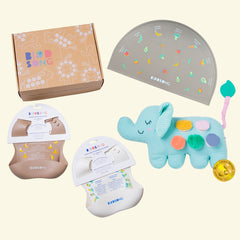
What age is the First Foods placemat for?
It's made for when your baby starts solids, usually between 4 and 6 months, depending on when your baby is ready, and works all the way through toddler meals.
How does the First Foods placemat bring Spanish and English into mealtime?
It labels seven common first foods in both languages, like banana / plátano and avocado / aguacate. When one of those foods is on the plate, point to it and name it while your baby sees, touches and tastes it. Naming a food in the moment your baby is experiencing it connects the word to the real thing.
Why name foods in both languages?
Babies learn words best from live interaction with the people who care for them (Kuhl, Tsao & Liu, 2003). With both languages printed, every caregiver can join in. Bilingual babies learn words for the same thing in both languages from early on (Pearson et al., 1995), so plátano and banana are two words your baby knows, not a mix-up.
Does the placemat suction to the table?
No. The First Foods placemat lies flat on your table without suction, so it's easy to move and take along to abuela's house or a restaurant.
What's the science behind Birdsong?
Birdsong toys are built on three findings from early-language research. Babies learn language best through live, back-and-forth interaction, not screens or recordings (Kuhl, Tsao & Liu, 2003). In a study of Spanish-speaking families, toddlers who heard more talk directed at them built bigger vocabularies (Weisleder & Fernald, 2013). And songs and daily routines help a family language last (Fishman, 1991). So every product puts your voice first.
Read more: How Does a Child Become Bilingual? A Look at the Science, Birth to Six